



Courts
Five charges, no verdict: inside Australia’s Roberts-Smith war-crimes prosecution
Five alleged deaths in Afghanistan have brought a former SAS soldier before an Australian criminal court. The public record reveals a prosecution shaped by competing demands: testing evidence, protecting sensitive information and preserving the presumption of innocence.
By B. O'Connell
27 October 2026 · 7 min read
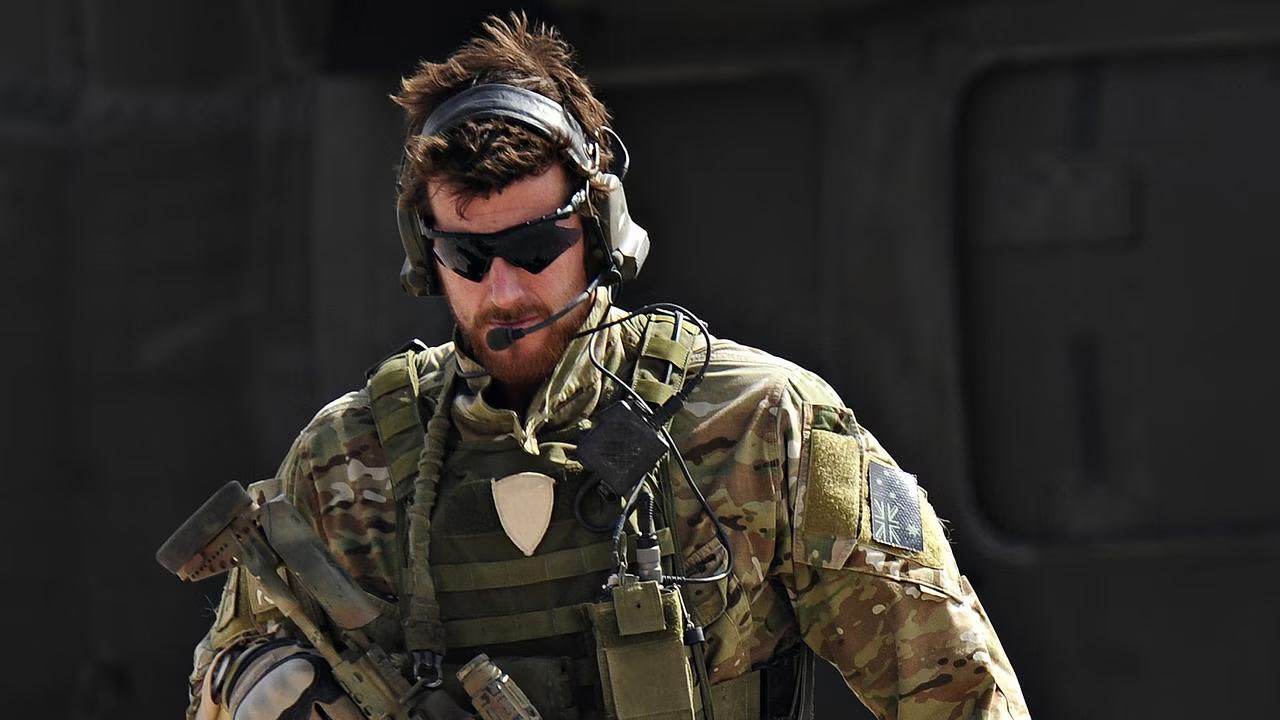
More than a decade after the five deaths alleged in the charges against Ben Roberts-Smith, the immediate work of his prosecution concerns the delivery of evidence and arguments over what may be disclosed publicly. Hearings on final non-publication and suppression orders are listed for August 2027. The timetable offers a more measured picture than the spectacle of an arrest: this is a case still being prepared, not one approaching a verdict.
The former Special Air Service Regiment soldier and Victoria Cross recipient was arrested on 7 April 2026 and charged with five offences of war crime — murder. The Commonwealth Director of Public Prosecutions (CDPP) says the allegations concern the deaths of five Afghan nationals between 2009 and 2012 who were not taking an active part in hostilities at the time. Roberts-Smith denies wrongdoing. He is presumed innocent, and no criminal court has determined his guilt.
Local Court Judge Greg Grogin granted Roberts-Smith bail on 17 April 2026. Subsequent court updates record variations to his bail and several restrictions on publication. Neither bail nor an interim procedural order determines whether the allegations are true.
An examination of the published charge particulars and court updates reveals two distinct stories: allegations about deaths during military operations in Afghanistan, and a domestic legal process determining how those allegations can be tested. The evidence, the statutory requirements and the defence response — not the intensity of public attention — will determine the outcome.
Five charges across three operations
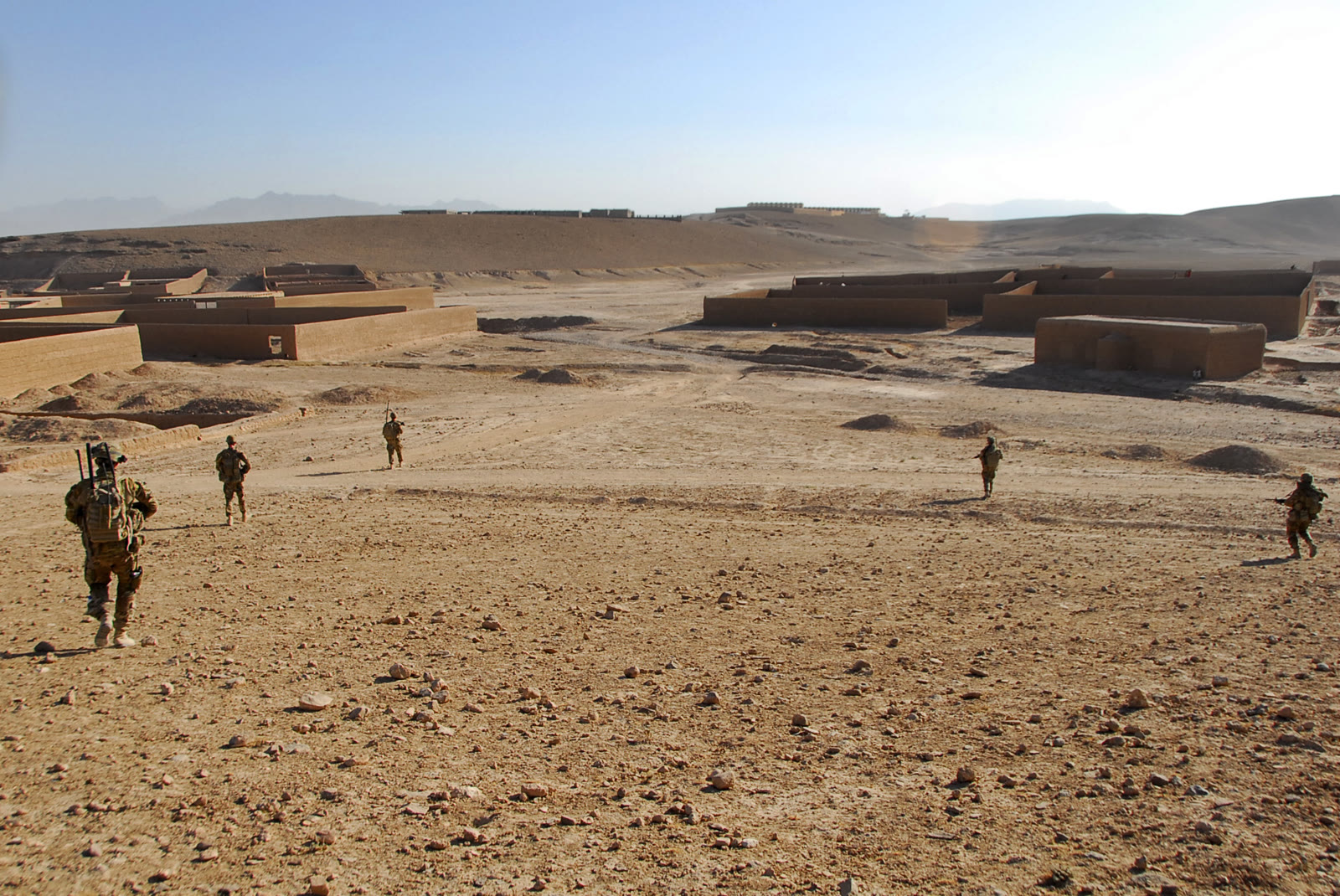
The Australian Federal Police (AFP) published charge particulars locating the alleged offences in three places in Uruzgan Province. Two charges relate to Kakarak on or about 12 April 2009: one alleges Roberts-Smith intentionally caused a person’s death; the other alleges he aided, abetted, counselled or procured another person to do so.
A third charge concerns Darwan on or about 11 September 2012 and alleges participation through aiding, abetting, counselling or procuring a killing. The remaining two concern Syahchow on or about 20 October 2012: one alleges joint commission with another person, and the other alleges aiding, abetting, counselling or procuring another killing.
Those distinctions matter. The case is not framed as five identical allegations that the accused personally carried out each killing. The prosecution relies on different forms of alleged criminal responsibility, which must be established for each count. A charge sheet sets out what is alleged; it does not establish that the alleged conduct occurred.
At the announcement of the arrest, AFP Commissioner Krissy Barrett said police would allege the men were unarmed, detained and under the control of Australian Defence Force members when they were killed. These remain prosecution allegations. The public charge particulars do not disclose the complete evidence supporting them or the full response that will be put forward by the defence.
What the prosecution must prove
The charges are brought under section 268.70 of the Commonwealth Criminal Code, with the provisions governing complicity and joint commission applied to four counts. Each offence carries a maximum penalty of life imprisonment. That is a statutory maximum, not a prediction of sentence or outcome.
Section 268.70 addresses the war crime of murder in an armed conflict that is not an international armed conflict. Broadly, the legal framework requires proof of a death, the protected status of the person killed, the required fault elements and a connection between the conduct and the armed conflict. Where complicity or joint commission is alleged, the prosecution must also establish the requirements of that form of responsibility.
This is not simply a question of whether someone belonged to an opposing force. The circumstances at the time of the alleged killing are central, including whether the person was taking an active part in hostilities or was protected from attack. The prosecution bears the burden of proving criminal guilt beyond reasonable doubt. Roberts-Smith does not have to prove his innocence.
The CDPP says the prosecution is brought in the name of the Attorney-General under section 268.121 of the code. It is an Australian prosecution under Australian law, not a proceeding before the International Criminal Court. Its seriousness does not alter the need to prove each charge according to the applicable law and admissible evidence.
The civil findings are not a criminal verdict
Roberts-Smith’s unsuccessful defamation litigation provides a substantial public record, but it must not be confused with the criminal prosecution. In 2023, Justice Anthony Besanko upheld the publishers’ truth and contextual-truth defences. Among the findings were that allegations of Roberts-Smith’s responsibility for, or complicity in, four unlawful killings were substantially true to the civil standard.
The Full Court dismissed his appeal in May 2025. Its published summary explained that the trial judge had found that the people whose killings Roberts-Smith caused, procured or agreed to were protected by the laws of armed conflict. Those were findings in litigation about defamatory publications, reached on the balance of probabilities with attention to the gravity of the allegations.
The criminal case has a different burden of proof and its own evidentiary process. A civil judgment is not a shortcut to conviction. Nor should the four killings addressed by the civil findings be treated as an interchangeable account of the five criminal counts. The allegations overlap in subject matter, but the criminal charges must be considered individually.
What the investigation record reveals — and does not
The joint AFP and Office of the Special Investigator investigation began in 2021. Their April 2026 announcement described a wider program examining alleged breaches of the laws of armed conflict by Australian Defence Force personnel in Afghanistan between 2005 and 2016.
At that time, the agencies said they had commenced 53 investigations in total, with 39 no longer under active investigation, subject to new evidence emerging. Those figures describe the broader investigative program, not 53 charges against Roberts-Smith. An investigation that is no longer active is not, by that description alone, a judicial finding about what happened.
The elapsed time between the alleged events and the prosecution raises practical evidentiary questions: how accounts can be tested, what contemporaneous records establish, and how different pieces of evidence fit together. These are questions for the proceedings, not reasons to assume either guilt or innocence. The publicly available charge summaries do not permit a reliable assessment of the entire prosecution brief.
National security and the limits of public scrutiny

The court updates show that information management is already a significant part of the case. On 1 September 2026, orders were made under section 22 of the National Security Information (Criminal and Civil Proceedings) Act 2004 following a Commonwealth application. The record also identifies interim non-publication and suppression orders.
Those published updates establish that restrictions exist; they do not reveal everything protected by them or justify speculation about confidential material. Responsible scrutiny can question the scope and operation of secrecy without attempting to reconstruct information the court has restricted.
The competing interests are substantial. Open justice allows the public to understand how a prosecution is conducted. Sensitive military information may require protection, while the accused must have a fair opportunity to contest the case. The existence of national-security orders does not, on its own, establish that the prosecution is either fair or unfair. Their legal operation must be assessed through the court process.
A timetable, not a trial date
According to the CDPP’s court update, the non-sensitive brief of evidence was substantially served on the defence on 7 September 2026. On 13 October, the court extended the deadline for the charge certificate and further service of the brief to 8 December 2026, when a further brief-service mention is listed at Sydney’s Downing Centre Local Court.
The same update records that, on the defendant’s application, the hearing on the prosecution’s application for non-publication and suppression orders was moved from 23 October 2026 to 16, 20 and 25 August 2027. A case-management mention is listed for 16 February 2027. These are procedural listings, not a published criminal-trial timetable.
As at 25 October 2026, it would therefore be misleading to describe a criminal trial as imminent. The public record shows preparation of the case and disputes about publication continuing into the following year. It does not establish when a final verdict will be delivered.
The test ahead
The public importance of the prosecution extends beyond the standing of the accused. It concerns whether allegations about Australian military conduct overseas can be examined through a domestic criminal process that is rigorous, independent and fair. It also concerns five alleged deaths — not merely a contest over reputation or the legacy of a military campaign.
A conviction would require proof of the charged offences beyond reasonable doubt. An acquittal would mean that criminal guilt had not been established to that standard. Neither possibility should be prejudged by earlier civil findings, honours, institutional assurances or public commentary.
For now, the defensible conclusion is limited but consequential: five charges have been laid, the evidence is being served, and important arguments about disclosure remain ahead. Australia’s war-crimes laws are being put to use in a closely watched prosecution. Whether the allegations against Roberts-Smith can withstand the criminal standard of proof remains a question for the courts, not for the headline.
Do you have information about this matter? NOFUF welcomes documents, records and first-hand accounts that may assist its reporting. All information and source identities will be treated as confidential. Send NOFUF a tip.
Do you have information about this matter? NOFUF welcomes documents, records and first-hand accounts that may assist its reporting. All information and source identities will be treated as confidential.
Right of reply
Not required. This article reports public court records and published statements from the prosecuting agencies. Roberts-Smith denies wrongdoing and is presumed innocent.
Sources0
No sources listed.
Disclosure
The article is drawn from public records and documents, which are attributed where used.