


Founder Record
What Is Sam Altman Building?
He said advertising was a last resort. Two years later it is a billion-dollar business inside ChatGPT. The record of who has stopped believing him is longer than most people realise.
In May 2024 Sam Altman called advertising a last resort and said he hated it. On 9 February 2026 OpenAI began showing ads inside ChatGPT, and by 31 August the line was running at a billion dollars a year. No court has found he defrauded anyone, and a jury rejected the one claim that got that far. What the record does show is a pattern in the distance between what he says and what later turns out to be the case.
By B. O'Connell
11 September 2026 · 12 min read
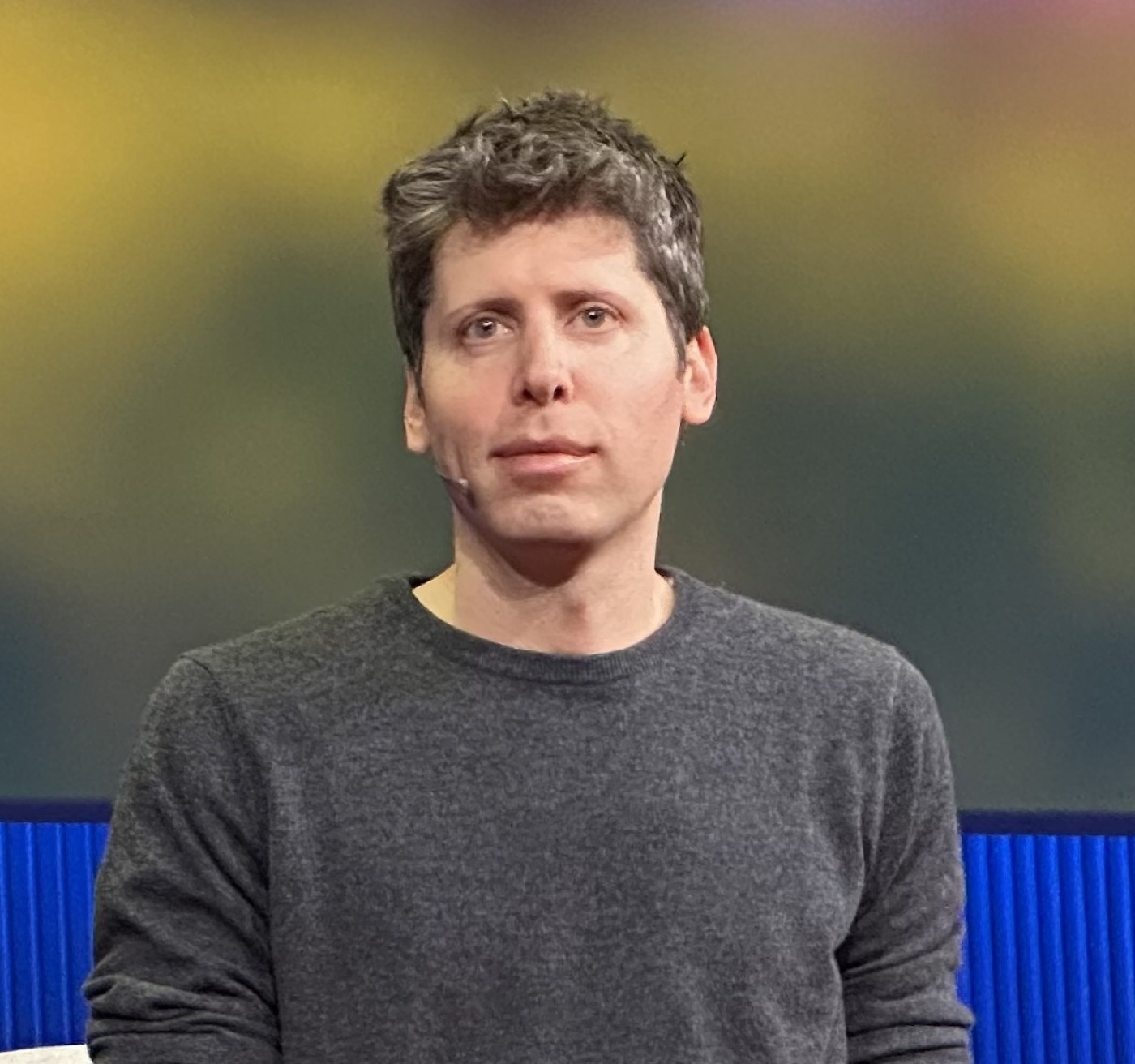
In May 2024, at a fireside chat at Harvard, Sam Altman was asked how OpenAI would make money.
His answer was unambiguous. "Ads plus AI is sort of uniquely unsettling to me," he said. "I kind of think of ads as a last resort for us for a business model." He went further: "I will disclose just as a personal bias that I hate ads." Advertising, he said, fundamentally misaligns a user's incentives with the company providing the service.
On 9 February 2026, OpenAI began showing advertisements inside ChatGPT.
They went first to logged-in adult users in the United States on the free and ChatGPT Go tiers. On 5 May, OpenAI opened a self-serve advertising manager to American businesses and removed the initial $200,000 minimum spend. By 31 August, less than 200 days after launch, the company reported the advertising line was running at an annualised rate of $1 billion.
That is the shape of the thing. Not a lie, exactly. A position held firmly in public, then reversed without the reversal being acknowledged as one.
It is worth asking what else has followed that shape, because the answer turns out to be quite a lot.
The money
OpenAI has told investors what it expects advertising to become.
According to Axios, the company projected roughly $2.5 billion in advertising revenue in 2026, growing to $11 billion in 2027, $25 billion in 2028, $53 billion in 2029 and $100 billion by 2030. That final figure assumes OpenAI's products reach 2.75 billion weekly users.
What OpenAI has told investors advertising will become
Projected advertising revenue, US dollars, billions. The 2030 figure assumes 2.75 billion weekly users.
Google's advertising revenue in 2025 was about US$294.7 billion and Meta's was about US$196.2 billion. These are projections shown to investors, not results. The first full year of the business is not yet closed.
Source: Projections reported by Axios; Alphabet and Meta Platforms annual results for the year ended 31 December 2025.
 NOFUF
For scale: Google's advertising revenue in 2025 was about US$294.7 billion. Meta's was about US$196.2 billion. OpenAI is projecting, within four years, an advertising business approaching the size of the largest attention merchants on earth.
Reuters reported that the pilot crossed $100 million in annualised revenue within six weeks, with more than 600 advertisers.
The person running it is Fidji Simo, announced in May 2025 as OpenAI's chief executive of applications, reporting to Altman. She spent a decade at Facebook and Meta, including two years as head of Facebook itself, before running Instacart. She has said advertising will remain a minority of OpenAI's revenue "probably forever."
OpenAI's own position is that the ads are clearly labelled, that paid tiers stay ad-free, that conversations are never sold to advertisers, and that responses are "driven by what's objectively useful, never by advertising." It calls the last principle Answer Independence. Temporary and logged-out chats carry no ads, and users can opt out of personalisation.
Those are meaningful commitments and they should be reported as made.
They are also commitments, which is the category of thing at issue.
What the critics are worried about
The concern raised by researchers is not that OpenAI will sell your transcripts. There is no evidence of that and the company denies it.
The concern is inference. A system that holds the most intimate text a person has ever typed into a machine, and which now has a commercial reason to act on it.
The security researcher Bruce Schneier, writing with a data scientist in January 2026, warned of "a future where AI companies profit from manipulating their users' behavior for the benefit of their advertisers and investors."
Zoë Hitzig, a former OpenAI researcher, published a New York Times opinion piece drawing the parallel to Facebook's own drift into advertising.
The practical version of the worry is simple. Someone asks a chatbot how to make rent this month. The chatbot knows the answer and now also has an advertiser who wants that person. Nothing about the architecture prevents the second thing from shaping the first, except a promise.
The candour problem
Here is the part that makes the advertising reversal worth more than a single story.
In November 2023, OpenAI's board fired Sam Altman. Its stated reason was that he "was not consistently candid in his communications with the board." He was back within five days after staff threatened to walk and Microsoft applied pressure. Three directors left instead.
One of them, Helen Toner, later gave specifics on the record. On the TED AI Show in May 2024 she said the board learned ChatGPT had launched by seeing it on Twitter. She said Altman "didn't inform the board that he owned the OpenAI Startup Fund, even though he constantly was claiming to be an independent board member with no financial interest in the company." She said that "on multiple occasions, he gave us inaccurate information about the small number of formal safety processes."
Writing with fellow former director Tasha McCauley in The Economist in July 2024, Toner said senior leaders had described to the board "a toxic culture of lying," and concluded that self-governance cannot reliably withstand the pressure of profit incentives.
OpenAI commissioned a review by the law firm WilmerHale. It found a breakdown in trust, but concluded the board had acted within its discretion and that Altman's conduct "did not mandate removal." It explicitly found the firing did not arise from concerns about product safety, the pace of development, or finances.
That finding matters and cuts in Altman's favour. The widely repeated internet theory that the board saw something terrifying in the lab is not supported by any evidence in the public record.
But the review has a hole in it. According to a New Yorker investigation by Ronan Farrow and Andrew Marantz, WilmerHale produced no written report. Its findings were delivered orally to two directors, reportedly on the advice of their personal lawyers. OpenAI published roughly 800 words summarising it.
Board chair Bret Taylor and director Larry Summers have said they do not accept Toner's and McCauley's claims.
So the public knows the board lost confidence in Sam Altman, and does not know precisely why. That gap has now been open for nearly three years.
He did own the fund
One of Toner's specific allegations is simply true.
The OpenAI Startup Fund, launched in 2021, was legally owned by Sam Altman personally. Not by OpenAI. Not by its foundation. Axios reported it in February 2024 and a filing with the US Securities and Exchange Commission in March 2024 transferred control to Ian Hathaway. The fund had roughly $325 million in gross assets and outside limited partners including Microsoft.
OpenAI's explanation is that the structure was "a temporary arrangement" that "involved no personal investment or financial interest from Sam."
That may be entirely accurate. It does not change the fact that while it stood, Altman was describing himself as a board member with no financial interest in a company whose venture fund he personally owned.
It was not new in 2023
The mistrust has a longer history than the board crisis.
Documents entered as exhibits in Elon Musk's lawsuit against OpenAI include an email from September 2017. Greg Brockman and Ilya Sutskever, two of Altman's own co-founders, wrote to him that they "haven't been able to fully trust" his "judgements throughout this process." They asked directly: "Is AGI truly your primary motivation? How does it connect to your political goals?"
Sutskever wrote separately: "The current structure provides you with a path where you end up with unilateral absolute control over the AGI... you've shown to us that absolute control is extremely important to you."
Six years before the board fired him, the people who built the company with him were writing down the same concern.
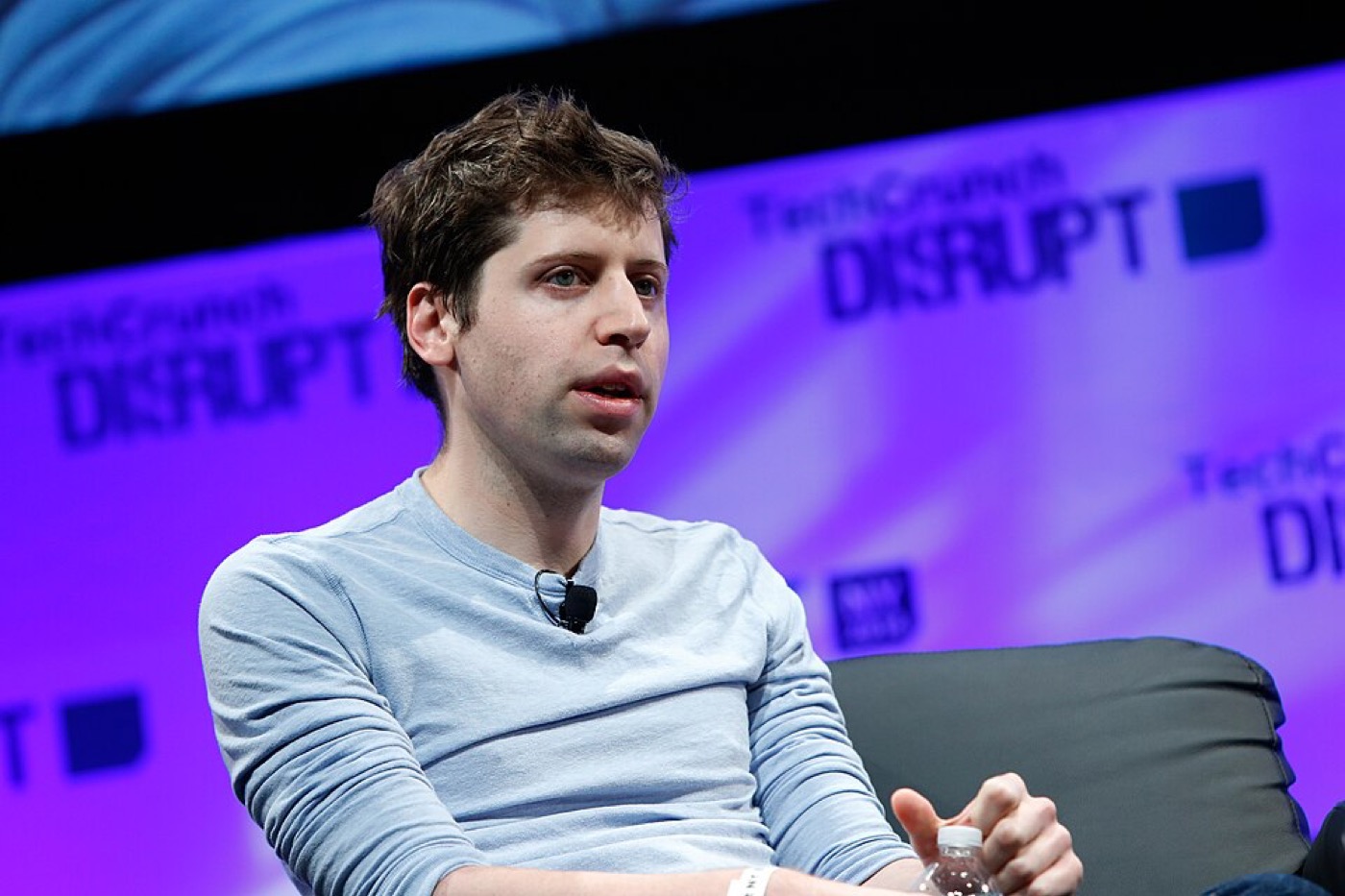
Then there is Y Combinator. Altman was its president from 2014 and left in 2019. The Washington Post reported in November 2023 that founder Paul Graham cut short an overseas trip to remove him, after partners felt he was prioritising personal projects and personal investments in YC-incubated startups.
Graham has publicly denied this. "People have been claiming YC fired Sam Altman. That's not true," he wrote, saying Altman agreed to step down to focus on OpenAI and that "we didn't have the legal power to fire anyone... All we could do was apply moral pressure."
This one is genuinely unresolved. Graham is on the record denying it. Anonymous sourcing and, according to a 2026 New Yorker account, Graham's own private remarks say otherwise. NOFUF reports the conflict rather than choosing a side.
The clawback he says he did not know about
In May 2024, chief scientist Ilya Sutskever and superalignment co-lead Jan Leike resigned. The superalignment team, which had been promised a fifth of OpenAI's computing power, was dissolved into other groups.
Leike wrote that "safety culture and processes have taken a backseat to shiny products" and that he had reached a breaking point.
It then emerged that departing OpenAI employees had signed non-disparagement agreements containing provisions that could cancel their vested equity if they criticised the company.
Altman posted on 18 May 2024: "vested equity is vested equity, full stop... there was a provision about potential equity cancellation in our previous exit docs; although we never clawed anything back, it should never have been something we had in any documents or communication. this is on me and one of the few times i've been genuinely embarrassed running openai; i did not know this was happening and i should have."
The existence of the clause is established fact. Whether the chief executive knew his own company was using it is disputed, and reporting noted his signature appeared on related incorporation documents.
The conflicts are real and disclosed
Court filings in the Musk case disclosed that Altman holds more than $2 billion in stakes in companies doing business with OpenAI. Helion Energy, roughly $1.7 billion. Stripe, roughly $633 million, which processes OpenAI payments. Retro Biosciences, roughly $258 million.
The Wall Street Journal reported in April 2026 that Altman pushed OpenAI to invest $500 million in Helion, in which he had personally invested at least $375 million.
Altman testified on 12 May 2026 that he has "always been recused" from conflicted decisions and that the board approved all final terms. He stepped down as Helion's board chair in March 2026 amid reported supply talks between the two companies.
Ten American state attorneys general have written to the SEC seeking scrutiny of these arrangements ahead of any public listing.
Separately, Altman's biometric venture World, formerly Worldcoin, which scans irises in exchange for cryptocurrency, has been suspended, banned, fined or ordered to stop in Kenya, Spain, Portugal, Hong Kong, South Korea, Germany, Brazil and Indonesia.
To be clear about what this is and is not: conflicts of interest are not misconduct. They are structural facts that require management. Altman says they have been managed. The disclosures exist because the system worked.
What Musk lost
Elon Musk sued OpenAI and Altman, alleging the company betrayed its founding non-profit mission and defrauded him of roughly $44 million in contributions.
On 18 May 2026, after a three-week trial, a nine-member advisory jury took under two hours to find his claims barred by the statute of limitations. Judge Yvonne Gonzalez Rogers adopted the finding and dismissed the case.
Musk testified: "I was a fool. I gave them free funding to create a startup."
Anyone building a case that Altman has been proven to have defrauded anybody should stop there. The one time a serious wrongdoing claim reached a jury, it failed.
The non-profit that now has shareholders
On 28 October 2025, OpenAI completed its restructuring. The for-profit became OpenAI Group PBC, a Delaware public benefit corporation, controlled by the OpenAI Foundation.
The Foundation holds about 26 per cent, worth roughly $130 billion, with the right to appoint and remove the entire board. Microsoft holds about 27 per cent, worth roughly $135 billion, with model access until 2032. Employees and investors hold the rest.
Altman has said the most likely path from here is an initial public offering.
The attorneys general of Delaware and California extracted concessions before issuing statements of no objection: the non-profit keeps control, a safety committee can require safety measures or block model releases, and OpenAI stays in California.
Not everyone was persuaded. In April 2025, twelve former OpenAI employees, backed by three Nobel laureates and organised with Harvard law professor Lawrence Lessig, urged the attorneys general to block the conversion. Public Citizen's Robert Weissman argued the non-profit's control is "illusory because there is no evidence of the nonprofit ever imposing its values on the for-profit."
In May 2025 Altman wrote: "OpenAI is not a normal company and never will be... going forward will remain a nonprofit that oversees and controls the for-profit. That will not change."
In 2017, before any of it, he said: "That's why we're a nonprofit. We don't ever want to be making decisions to benefit shareholders. The only people we want to be accountable to is humanity as a whole."
The cases involving the dead
OpenAI and Altman are named in a series of wrongful death and product liability suits in California.
The first, filed in August 2025 by the family of 16-year-old Adam Raine, alleges ChatGPT functioned as a "suicide coach." OpenAI's November 2025 answer argued the death was caused in whole or part by the teenager's "misuse, unauthorized use, unintended use, unforeseeable use, and/or improper use" of the product, and said ChatGPT directed him to crisis resources more than 100 times. The family's lawyer called the filing disturbing.
In November 2025, seven further suits were filed in Los Angeles and San Francisco naming OpenAI and Altman. The core allegation is that GPT-4o was rushed to market. They are being coordinated as In re: ChatGPT Product Liability Cases.
These are allegations. None has been tested at trial.
OpenAI has since introduced a router sending sensitive conversations to different models, an age-prediction system, parental controls and blackout hours. Altman wrote: "We prioritize safety ahead of privacy and freedom for teens."
In June 2026, Florida's attorney general filed a state consumer-protection suit against OpenAI and Altman, alleging the company "put children at great risk."
Where Australia sits
Australia has no dedicated artificial intelligence statute. The technology is governed by the Privacy Act, Australian Consumer Law and a voluntary safety standard.
The eSafety Commissioner issued transparency notices to AI companion providers in October 2025 and signalled that larger platforms, OpenAI among them, could expect letters.
The ACCC's digital platforms inquiry found that 83 per cent of surveyed Australians believe companies should obtain consent before using personal data to train AI models.
A parliamentary committee inquiry has submissions closing on 14 September 2026 and reports by 30 November. Amendments to the Privacy Act requiring transparency in automated decision-making take effect in December 2026.
Advertising inside ChatGPT has not yet reached Australian users. On OpenAI's own projections, it will.
So what is he building?
The honest answer, on the documented record, is narrower than the internet's answer and more troubling than OpenAI's.
There is no proven scheme. A jury rejected the fraud claim. A law firm review found no mandate for removal. Altman takes no equity in OpenAI, forgoing a fortune that would be among the largest ever assembled, and that is unusual enough to be worth stating plainly.
What there is instead is a pattern, and the pattern is about the distance between what Sam Altman says and what later turns out to be the case.
Advertising was a last resort until it was a billion-dollar business. He was an independent director with no financial interest while personally owning the venture fund. The non-profit would never make decisions to benefit shareholders, and now has them. Departing staff faced an equity clawback clause that the chief executive says he did not know existed inside his own company.
Each of those has an innocent explanation, offered and on the record. Taken one at a time, each is survivable.
Taken together, they describe a man whose assurances have a short shelf life, now running the most consequential company on earth, with a new commercial incentive to know everything about everyone who uses it.
He is building the largest advertising business in history on top of the most intimate dataset ever assembled. He is doing it inside a structure he promised would never answer to shareholders, and which now does.
Whether that ends well depends entirely on whether the promises hold this time.
The record on promises is the story.
Do you have information about this matter? NOFUF welcomes documents, records and first-hand accounts that may assist its reporting. All information and source identities will be treated as confidential.
Right of reply
OpenAI's and Mr Altman's positions are quoted from their published statements, interviews and filings. No right of reply was sought.
Sources34
- Sam Altman in conversation at Harvard Business School, on advertising as a last resort. Harvard Business School, fireside chat, 1 May 2024.
- Announcement that advertisements will appear in ChatGPT for logged-in adult users in the United States on the free and Go tiers. OpenAI, 9 February 2026.
- Self-serve advertising manager opened to United States businesses, minimum spend removed. OpenAI, 5 May 2026.
- Advertising line reported at an annualised run rate of one billion dollars. OpenAI, 31 August 2026.
- OpenAI advertising revenue projections shown to investors, 2026 to 2030. Axios, 1 January 2026.
- Annual results for the year ended 31 December 2025, advertising revenue. Alphabet Inc, 3 February 2026.
- Annual report on Form 10-K, financial year 2025, advertising revenue. Meta Platforms, Inc, 29 January 2026.
- ChatGPT advertising pilot passes one hundred million dollars annualised with more than six hundred advertisers. Reuters, 1 March 2026.
- Appointment of Fidji Simo as chief executive of applications. OpenAI, 7 May 2025.
- Published advertising principles, including labelling, ad-free paid tiers and Answer Independence. OpenAI, 9 February 2026.
- Commentary on advertising-funded conversational systems and user manipulation. Bruce Schneier and Nathan Sanders, 1 January 2026.
- Opinion article by a former OpenAI researcher on advertising inside chatbots. Zoë Hitzig, The New York Times, 1 January 2026.
- Board statement on the removal of Sam Altman as chief executive. OpenAI, 17 November 2023.
- Interview with former director Helen Toner. The TED AI Show, 28 May 2024.
- AI firms mustn't govern themselves, say ex-members of OpenAI's board, by Helen Toner and Tasha McCauley. The Economist, 26 May 2024.
- Summary of the WilmerHale review of the November 2023 events. OpenAI, 8 March 2024.
- Investigation into OpenAI's governance and the November 2023 board crisis, by Ronan Farrow and Andrew Marantz. The New Yorker, 1 January 2026.
- Reporting on the ownership of the OpenAI Startup Fund, and the Form D filing transferring control to Ian Hathaway. Axios and the US Securities and Exchange Commission, 29 March 2024.
- Emails from Greg Brockman and Ilya Sutskever to Sam Altman, September 2017, entered as exhibits in Musk v OpenAI. United States District Court, Northern District of California, 20 September 2017.
- Reporting on Sam Altman's departure from Y Combinator, and Paul Graham's public response. The Washington Post, 22 November 2023.
- Resignation statements of Ilya Sutskever and Jan Leike, and Sam Altman's statement on the equity cancellation provision. Posts to X, 18 May 2024.
- Disclosures of Sam Altman's holdings in Helion Energy, Stripe and Retro Biosciences, and his trial testimony. Musk v OpenAI, United States District Court, Northern District of California, 12 May 2026.
- Reporting on OpenAI's investment in Helion Energy. The Wall Street Journal, 1 April 2026.
- Regulatory actions against World, formerly Worldcoin, in Kenya, Spain, Portugal, Hong Kong, South Korea, Germany, Brazil and Indonesia. National data protection authorities, 1 January 2026.
- Verdict and judgment dismissing Musk v OpenAI as barred by the statute of limitations, Judge Yvonne Gonzalez Rogers. United States District Court, Northern District of California, 18 May 2026.
- Completion of the restructuring: OpenAI Group PBC, a Delaware public benefit corporation, controlled by the OpenAI Foundation. OpenAI, 28 October 2025.
- Statements of no objection and the memoranda of understanding on the restructuring. Attorneys General of California and Delaware, 28 October 2025.
- Letter from former OpenAI employees urging the attorneys general to block the conversion, organised with Lawrence Lessig. Not For Private Gain, 23 April 2025.
- Raine v OpenAI, complaint and the defendant's answer. Superior Court of California, County of San Francisco, 26 August 2025.
- In re: ChatGPT Product Liability Cases, seven complaints naming OpenAI and Sam Altman. Superior Courts of California, Los Angeles and San Francisco, 6 November 2025.
- Consumer protection proceeding against OpenAI and Sam Altman. Attorney General of Florida, 1 June 2026.
- Transparency notices to artificial intelligence companion providers under the Online Safety Act. eSafety Commissioner, 1 October 2025.
- Digital platform services inquiry, consumer attitudes to the use of personal data in training artificial intelligence. Australian Competition and Consumer Commission, 1 December 2025.
- Privacy and Other Legislation Amendment Act 2024 (Cth), automated decision-making transparency, commencing December 2026. Commonwealth of Australia, 10 December 2024.
Disclosure
NOFUF holds no interest in OpenAI, in any company named in this article, or in any party to the proceedings described. NOFUF uses commercial artificial intelligence tools, including OpenAI's, in the course of research and production. No part of this article was written by one.