



Politics
Grace Tame's Apology
She apologised on Thursday for harm caused by the mischaracterisation of her remarks. The remarks themselves, and the claim underneath them, she left standing.
Grace Tame posted a video on Thursday about comments she made on ABC Radio Sydney six months ago on sexual violence during the 7 October attacks. The apology attaches to the harm caused by how her remarks were understood, not to the remarks. In the same video she restated the claim underneath them. Here is what she said in March, what the ABC Ombudsman found, and what the investigations she relies on actually concluded.
By B. O'Connell
10 September 2026 · 6 min read
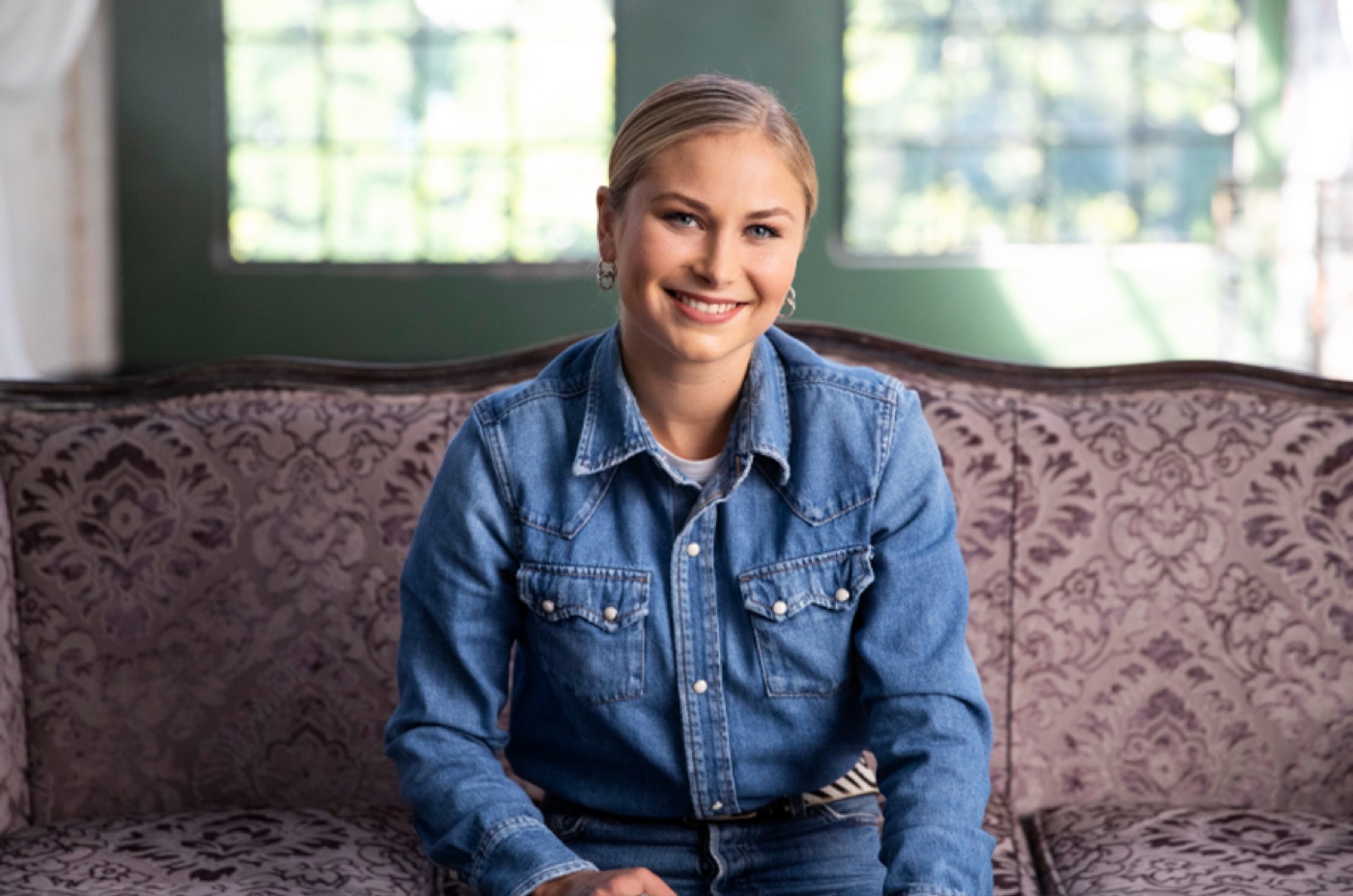
Grace Tame posted a video to Instagram on Thursday addressing comments she made on ABC Radio Sydney almost six months ago about sexual violence during the 7 October 2023 attacks in southern Israel.
The video is short. It is also carefully constructed, and what it does not say is as material as what it does.
The former Australian of the Year said she stands with survivors of sexual violence everywhere, whoever they are. She said her March comments had been misinterpreted to mean she disbelieves Israeli survivors, and that this is not the case. She said she does not deny individual accusations of rape by Israeli women, including accounts of gang rape. She said she does not hate Israelis or Jewish people, that she believes Israeli survivors and Jewish survivors as she believes all survivors, and that she abhors the crimes of the State of Israel.
She then apologised. The apology, in her own construction, is for harm caused by the mischaracterisation of her remarks, not for the remarks.
And in the same video she restated the proposition that caused the controversy: that Human Rights Watch was unable to find evidence supporting the claim that Israeli women were raped en masse on 7 October 2023.
What was said in March
The interview was broadcast on the Mornings program on ABC Radio Sydney on 16 March 2026, hosted by Hamish Macdonald.
Ms Tame had appeared to discuss the fallout from a February protest against the visit of Israeli President Isaac Herzog, at which she led a chant of "from Gadigal to Gaza, globalise the intifada" and described Mr Herzog as a war criminal and an inciter of genocide. A number of her speaking engagements for the year had been cancelled, and there had been public calls for her Australian of the Year honour to be revoked.
Asked by the host, Hamish Macdonald, about Israeli women raped and killed on 7 October, she said: "I'm not going to sink to the level of entertaining any kind of propaganda, Hamish." Asked what the propaganda in the question was, she said: "Those things have been debunked. Look, violence is, let's be real, violence is happening on both sides. But this is not a fair fight. We're not talking about two equal cohorts, even marginally." The Ombudsman's finding records that she also used the terms "bad faith actors" and "well-oiled smear campaigns" during the interview.
The complaints, and the finding
The ABC Ombudsman's office received a campaign of 145 identical complaints about the interview, with a further four raising distinct but similar matters.
The complaints alleged that Ms Tame had wrongly characterised the rape of Israeli women as propaganda and as debunked, and had not been corrected on air or fact-checked afterwards. They alleged that her language about bad faith actors and smear campaigns invoked antisemitic tropes concerning Jewish influence over media. And they alleged she had been supportive of Hamas.
The Ombudsman assessed those complaints against two of the ABC's editorial standards: the requirement to make reasonable efforts to ensure material facts are accurate and presented in context, and the requirement to avoid the unjustified use of stereotypes or discriminatory content.
The finding was no breach.
That outcome has been reported inconsistently since. It is not a finding that Ms Tame's statements were accurate. It is a finding about the conduct of the broadcaster in a live interview, and it is published on the ABC's own register of significant no-breach findings.
What the evidence actually says
Ms Tame's video rests on a specific claim about a specific organisation, so the organisation's published position is checkable.
Human Rights Watch investigated the 7 October attacks and published its report on 17 July 2024. On sexual violence, the report found evidence of sexual and gender-based violence by fighters, including forced nudity and the non-consensual taking and posting of sexualised images on social media.
It also said, plainly, that it was not able to gather verifiable information through interviews with survivors of or witnesses to rape during the assault, and that there is only one public account reportedly from such a survivor. In its accompanying questions and answers, HRW noted that many victims may have been killed, that stigma and trauma deter reporting, and that Israeli security forces and other responders largely did not collect forensic evidence from the attack sites or from recovered bodies. It recorded that it had asked the Israeli government for access to information on sexual and gender-based violence and had not been granted it. It stated that it does not know, and will likely never know, the full picture.
So the narrow proposition Ms Tame attributes to HRW is close to what HRW said about its own investigation. What HRW did not say is that the allegations were debunked, and its report does not stand as a refutation. It is an account of what one organisation was and was not able to verify, with the reasons for the gap set out.
Two other bodies reached findings HRW itself cites.
The UN Special Representative of the Secretary-General on Sexual Violence in Conflict, Pramila Patten, published a mission report on 4 March 2024. It concluded there were reasonable grounds to believe conflict-related sexual violence occurred during the 7 October attacks in multiple locations, including rape and gang rape in at least three locations, and that there was clear and convincing information that hostages held in Gaza had been subjected to sexual violence.
The same report recorded the limits of what the mission team could establish. Among more than 5,000 photographs and around fifty hours of footage reviewed, it found no digital evidence specifically depicting acts of sexual violence, and no tangible indications of rape were identified in its digital analysis of images of bodies.
The UN Independent International Commission of Inquiry documented cases indicative of sexual violence against women and men in and around the Nova festival site, the Nahal Oz military outpost and several kibbutzim including Kfar Aza, Re'im and Nir Oz, and found indications that members of the military wing of Hamas and other Palestinian armed groups committed gender-based violence in several locations in southern Israel that day.
The Association of Rape Crisis Centers in Israel published its own report concluding that the attacks included systematic sexual violence, based on witness statements, interviews with first responders and information received directly.
Set together, the record is neither the settled mass-rape narrative nor the debunking Ms Tame described in March. It is a body of findings expressed in the language of reasonable grounds and indications, arrived at by investigators who documented, repeatedly, why definitive proof was unavailable to them: victims killed, forensic evidence not collected, survivors not identified, access not granted.
Why the gap matters
Ms Tame's public standing was built on a single proposition, argued over a decade: that survivors of sexual violence are routinely disbelieved, and that the reflex to demand proof before belief is itself part of the harm.
Her March remarks applied a different standard, and her clarification on Thursday resolves the tension only partly. She now says she believes individual Israeli survivors, including those describing gang rape. She continues to reject the characterisation of the violence as widespread, on the basis of an investigation whose own authors said they could not gather the evidence that would settle it either way.,
Both positions can be held at once. Whether they can be held by the same person who spent a decade arguing that unverified does not mean untrue is a question her video does not address.
The apology and its wording
The construction Ms Tame used on Thursday is a familiar one in Australian public life, and it has a name in media training: the conditional apology. The regret attaches to the harm caused by how remarks were understood, rather than to the remarks.
It is the same construction the Prime Minister used about Ms Tame herself in February, when he described her as difficult during a rapid-fire segment at a Melbourne conference and then said that if there was any misinterpretation, he certainly apologised. Ms Tame's response at the time was that it was a patronising cop-out.
Do you have information about this matter? NOFUF welcomes documents, records and first-hand accounts that may assist its reporting. All information and source identities will be treated as confidential.
Right of reply
Ms Tame's statements and the ABC broadcast are quoted from the published record. No right of reply was sought.
Sources10
- Video statement published to Instagram. Grace Tame, 10 September 2026.
- Ombudsman investigation report, ABC Radio Sydney Mornings, interview with Grace Tame, 16 March 2026; finding of no breach, published on the register of significant no-breach findings. ABC Ombudsman.
- Report on Ms Tame's clarification. ABC News, 10 September 2026.
- Report on Ms Tame's apology. Guardian Australia, 10 September 2026.
- Grace Tame apologises after Oct 7 remarks. Yahoo News Australia, 10 September 2026. Open the document
- "I Can't Erase All the Blood from My Mind": Palestinian Armed Groups' October 7 Assault on Israel, and the accompanying Questions and Answers. Human Rights Watch, 17 July 2024.
- Mission report on conflict-related sexual violence during and after the 7 October 2023 attacks. Office of the UN Special Representative of the Secretary-General on Sexual Violence in Conflict, 4 March 2024.
- Findings on the attacks of 7 October 2023. UN Independent International Commission of Inquiry on the Occupied Palestinian Territory.
- Report on sexual violence on 7 October 2023. Association of Rape Crisis Centers in Israel.
- Reporting of the Prime Minister's remarks at the Future Victoria Summit, Melbourne, and Ms Tame's response. Australian press, 25 February 2026.
Disclosure
None.