



Crime
A Construction Business as a Laundry: The Killara Charge Inside the $150 Million Case
Police allege a North Shore builder took a crime syndicate's cash, paid his staff with it, and sent clean money back under false invoices. The charge carries twelve years.
A 45-year-old Killara man was refused bail on 4 July 2026, charged with laundering $2.4 million through his construction business for a syndicate police say washed $150 million for organised crime. The alleged method is the oldest one there is: a real business, real wages, and a fake invoice.
By NOFUF
10 October 2026 · 3 min read
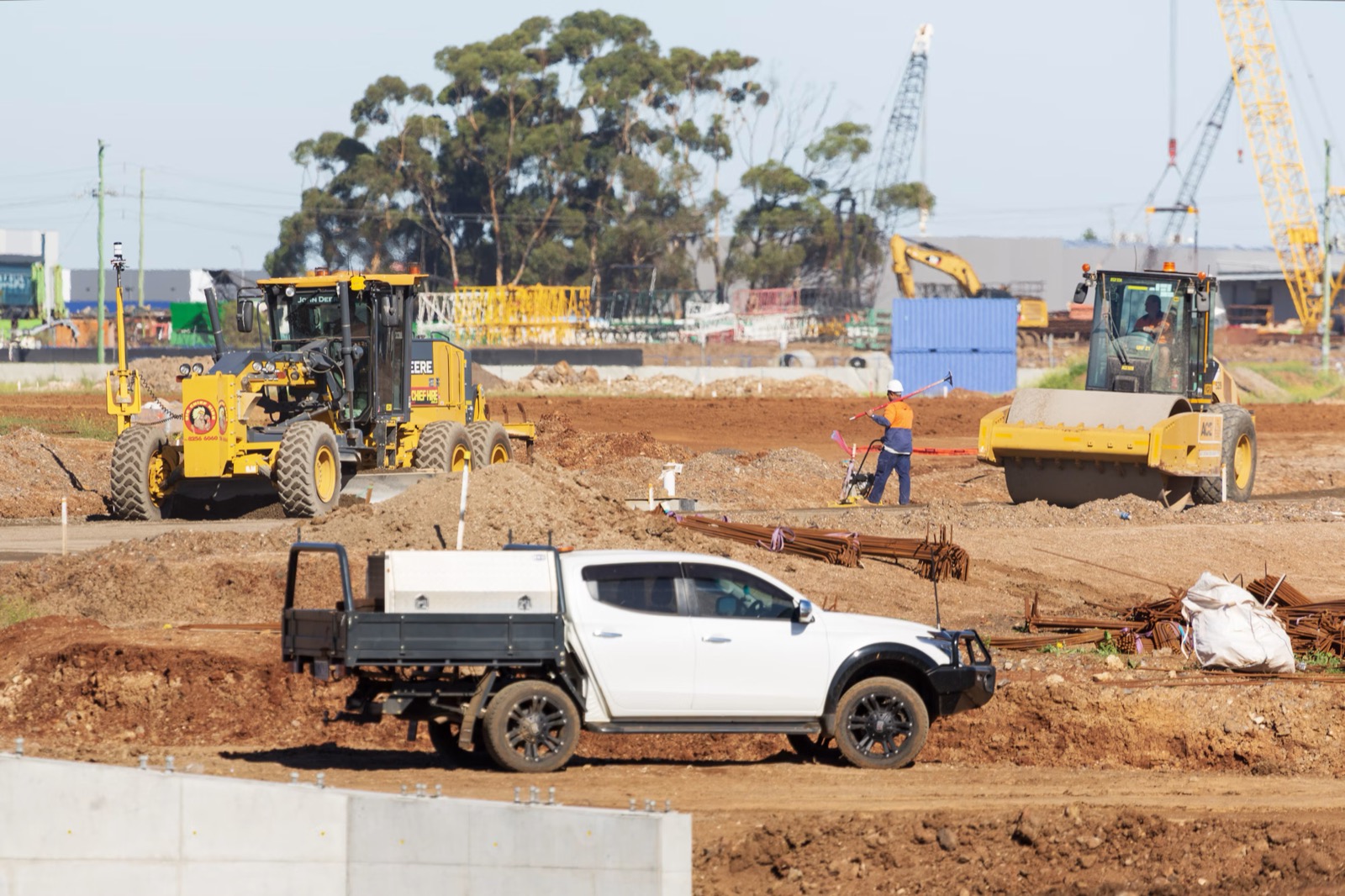
On 4 July 2026, a 45-year-old man from Killara, on Sydney's upper North Shore, was scheduled to appear before the NSW Bail Division Court charged with one count of dealing with proceeds of crime worth $1 million or more. Police had refused him bail the day before, after a search warrant at a Killara address turned up several mobile devices, data from a computer, and about $30,000 in cash.
The Australian Federal Police allege that between June 2024 and November 2025 he laundered $2.4 million of criminal proceeds through his own construction business. The charge, under section 400.3 of the Commonwealth Criminal Code, carries a maximum of twelve years' imprisonment.
Every element of that is an allegation. He has not been convicted of anything, and the AFP's own release frames each step with "will allege" and "allegedly". The reason the case is worth setting out is not the man. It is the method, which the police describe in enough detail to show how an ordinary business becomes a laundry.
The method
According to the AFP, the man received illicit cash on behalf of a money laundering syndicate. He is alleged to have used that cash to pay the wages of his construction staff. The business then earned legitimate money in the ordinary way, from its customers, through its bank. That clean money, plus a commission, was allegedly transferred back to the syndicate under a fraudulent invoice.
Put plainly: dirty cash goes in as wages, clean bank money comes out as a payment for services that were never rendered, and the business keeps a cut for the trouble.
A construction business suits the scheme for a reason the police do not spell out but any builder would recognise. The trade runs on cash more than most. Casual labour, subcontractors and site expenses paid in notes are not unusual, so a payroll that leans on cash draws less attention than it would in an office. And the invoice flowing the other way, a builder paying a supplier or a contractor, is the most ordinary document in the industry.
The AFP's Detective Acting Superintendent Dan Burnicle said money laundering investigations were "inherently challenging" because of the "complex web of deception used by criminals, including comingling licit and illicit cash." He said police would allege the man "used his own business as a front to launder dirty cash and avoid taxes, which enabled the money laundering syndicate to keep up their services for organised crime."
Where the case came from
The Killara charge did not begin with the Killara man. It grew out of a joint AFP and NSW Police investigation in December 2025, in which four men were charged over the alleged laundering of $150 million in illicit cash., Police say those four were members of a sophisticated syndicate washing money on behalf of an organised crime group.
Devices seized in that investigation were analysed, and the analysis is what led investigators to the 45-year-old. That sequence is how most of these cases now run: the syndicate is the target, its phones and laptops are the map, and the names on the map are the businesses that moved the money.
The AFP-led Taskforce Avarus, which brought the charge, draws on AUSTRAC, the Australian Criminal Intelligence Commission, the Australian Border Force and the major banks. Its stated purpose is to unpick the structures criminals use to hide money, and a tradesman's payroll is exactly such a structure when it is used this way.
What $2.4 million buys
The sum is small beside the $150 million the syndicate is alleged to have handled. That is the point of a business like this one in the chain. A syndicate with $150 million to wash does not put it through one laundry. It puts it through many, each small enough to look like a business having a good year, and each paid a commission for the service.
On the AFP's account, the Killara business was one of those. If the allegation is made out, the syndicate's "services for organised crime", as Burnicle put it, depended on people like him being willing to lend their payroll.
What happens next
The man was refused police bail and was listed for the Bail Division on 4 July 2026. As of October 2026, NOFUF has found no public record of a plea or a hearing date beyond that. The charge remains an allegation, he is presumed innocent, and nothing in this article should be read as suggesting otherwise. NOFUF will update this article when the public record changes.
The four men charged in December 2025 over the $150 million are likewise before the courts, and the same applies to them.
Do you have information about this matter? NOFUF welcomes documents, records and first-hand accounts that may assist its reporting. All information and source identities will be treated as confidential.
Right of reply
The article reports the Australian Federal Police's published allegations as allegations. The man charged has not been named by the AFP and is not named here; he is presumed innocent, and the matter is before the courts. No right of reply was sought.
Sources4
- Media release, Sydney man charged with allegedly laundering $2.4 million in dirty cash. Australian Federal Police, 4 July 2026. Open the document
- Criminal Code Act 1995 (Cth), section 400.3, dealing with money or property worth $1,000,000 or more. Commonwealth of Australia.
- Taskforce Avarus, AFP-led multi-agency money laundering taskforce. Australian Federal Police.
- Media release on the joint AFP and NSW Police investigation of December 2025 in which four men were charged over the alleged laundering of $150 million. Australian Federal Police, 1 December 2025.
Disclosure
None. No person or company referred to in this article has any connection to NOFUF or its editor.
More on Crime
- $1 Million Cash, Vacuum-Sealed Bags
10 October 2026
- The Dubai Scam Bust
10 September 2026
- Is Sydney's Gangland Violence Out of Control?
9 September 2026
- Underground Banks
6 September 2026